Raising GBS awareness through film: Community engagement in Uganda
Despite its significant threat to pregnancy and infant health, information about Group B Streptococcus (GBS) can escape those most affected – pregnant women and mothers. The lack of routine surveillance in low- and middle-income countries means awareness of the bacterium is sometimes low, even though it can cause serious illnesses such as sepsis, pneumonia, and meningitis in infants.
Several GBS vaccines are currently undergoing trials, with the WHO anticipating that the first maternal GBS vaccines may become available by 2030. Currently, GBS in pregnant women is treated with antibiotics to prevent its transfer to the baby, but the availability of screening to identify those who would benefit from antibiotics is limited in low- and middle-income countries. A vaccine could make prevention more accessible, as long as it is understood and accepted by pregnant women, health workers, and communities more broadly.
Aiming to strengthen understanding of the benefits of maternal vaccines and the importance of participating in vaccine trials, PROTECT partners are actively working with communities to learn their views and create materials that effectively communicate vaccination-related information.
Connecting through films and conversations
In December 2025, the team at MU-JHU, a PROTECT partner in Uganda, organised a short film viewing and focus group discussion with pregnant women on the topic of GBS infections and potential long-term effects on children’s development. The aim was to inform participants about the bacterium and to learn from them about their understanding of the illness it causes and their attitudes towards potential vaccination.
Before viewing the films, the team facilitated a conversation about participants’ trust in different sources of health-related information, their beliefs and concerns about vaccination, and their views on the causes of disability in children.
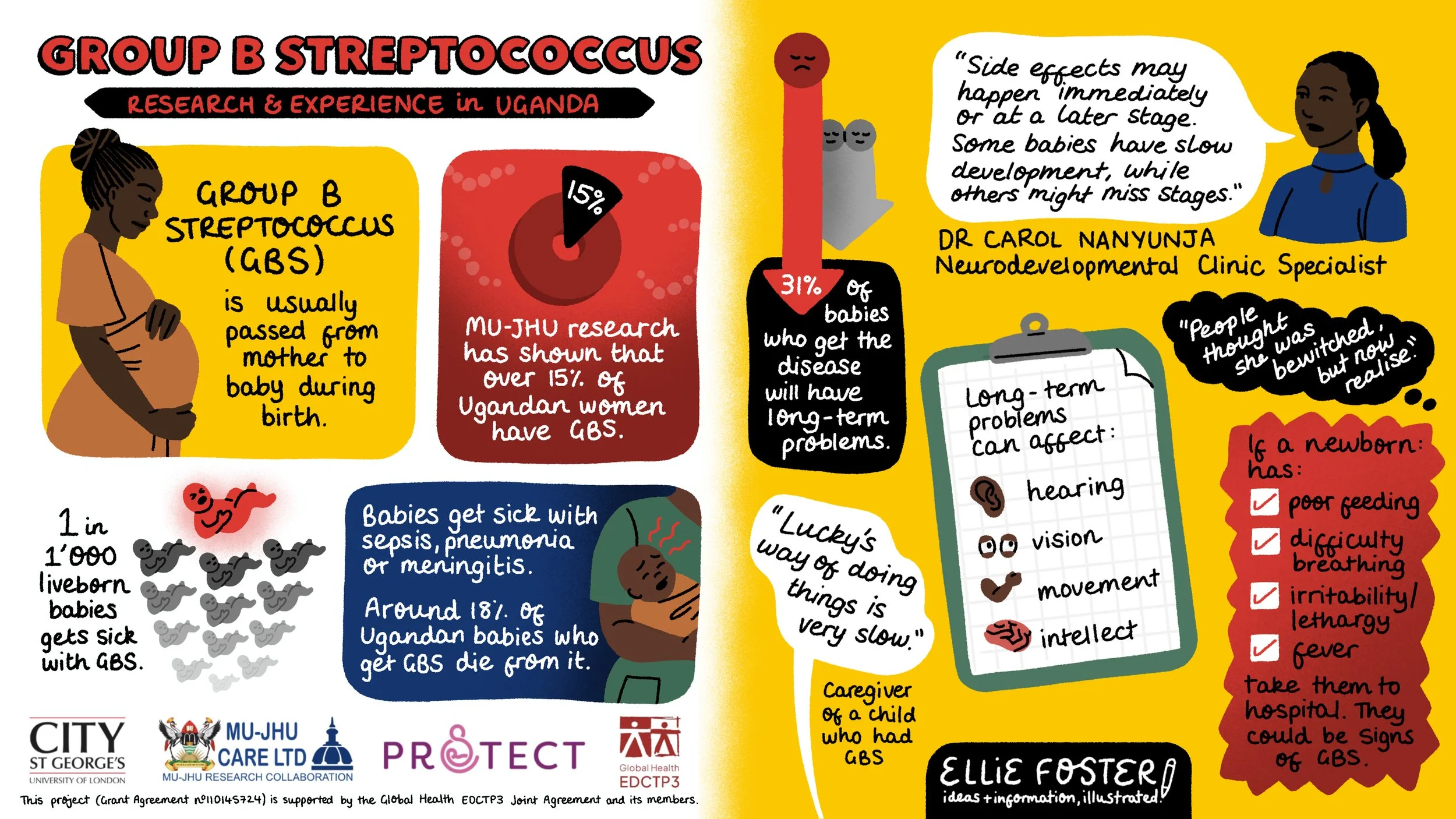
A visual summary of the GBS-related information that was presented to the focus group [illustrations by Ellie Foster].
Following the initial discussions, the participants watched two short films featuring parents whose children had been infected with GBS. The films highlighted facts about GBS, including its signs and long-term effects. The parents interviewed for the films spoke about their experiences, their communities' reactions, and their advice for others in similar situations.
Watch one of the films that were showed at the event:
After watching the films, the participants continued the conversation about infant health and GBS. Many were emotionally impacted by the films and eager to learn about GBS prevention. Some of them expressed interest in a vaccine. Through the conversation, it also became clear that the familiar setting of the films (they were filmed in Kampala, Uganda) and the language made the content resonant and believable.
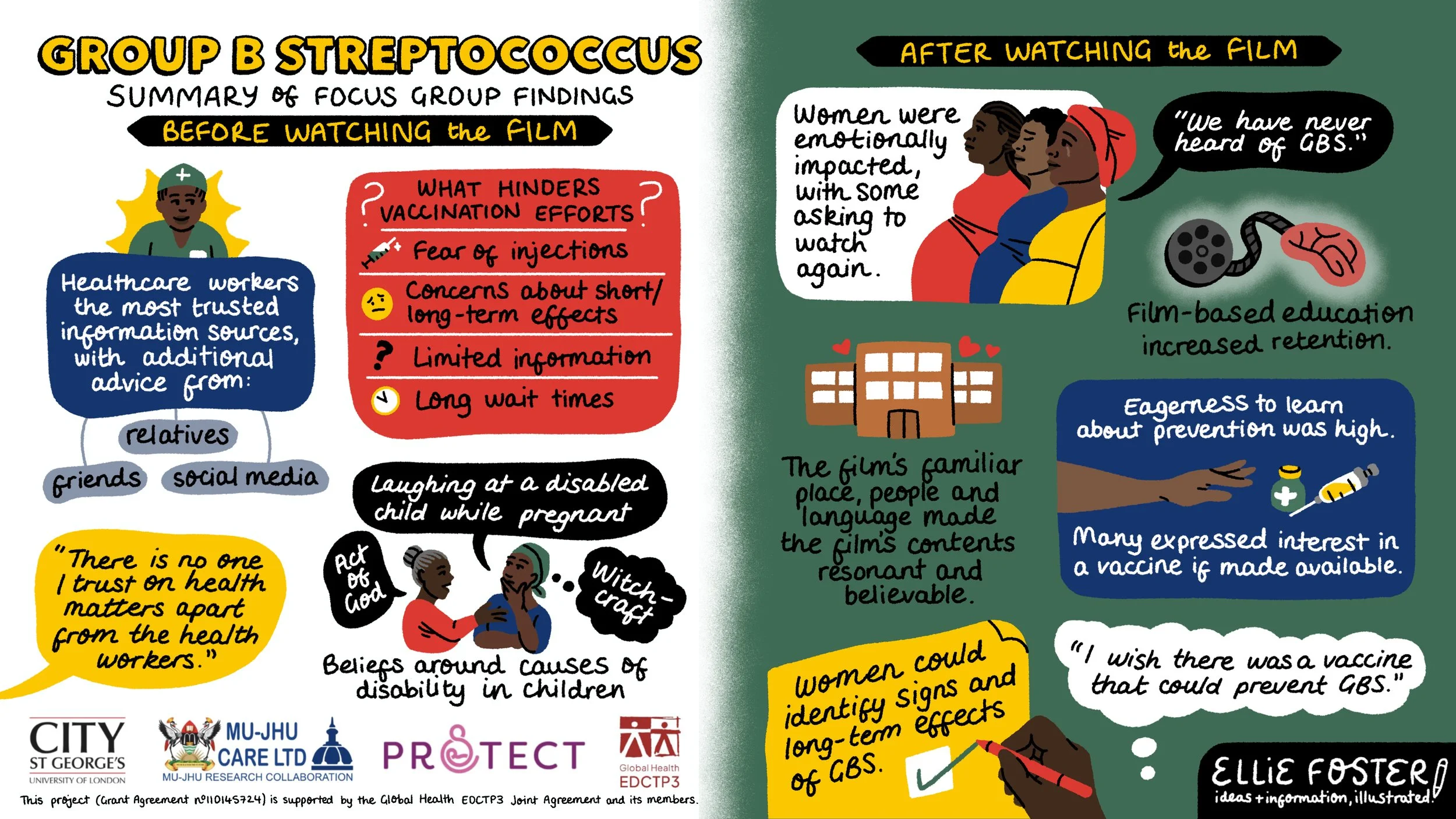
A visual summary of the focus group participants’ contributions to the discussion [illustrations by Ellie Foster].
From deeper understanding to better communication
The focus group is part of a large block of PROTECT’s work aimed at improving vaccine confidence and maternal vaccine participation. In Kenya, Malawi, Mozambique and Uganda, researchers are conducting a study to explore knowledge, attitudes, and practices regarding those topics. In addition to pregnant women, this work also includes their families, healthcare providers, and other community members and leaders.
The study’s findings will inform the co-creation of communication and education toolkits to raise awareness of maternal vaccines and clinical trials.
Learn more about this work from the researchers leading the work on improving vaccine confidence and maternal vaccine trial participation: