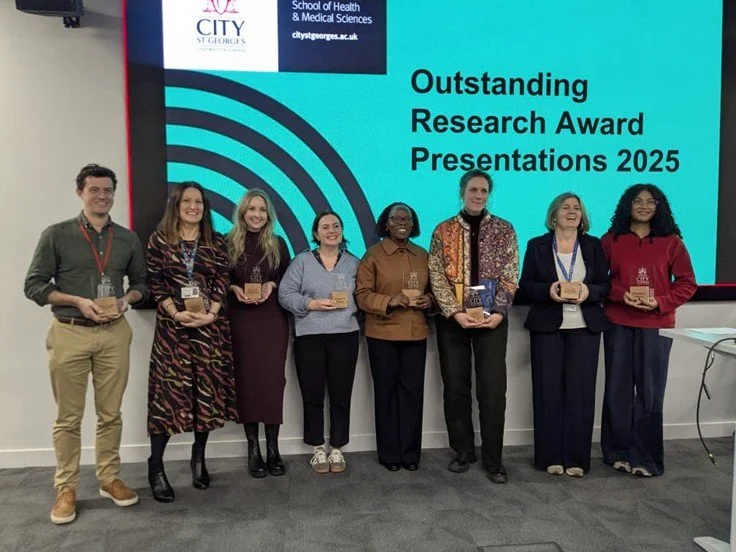
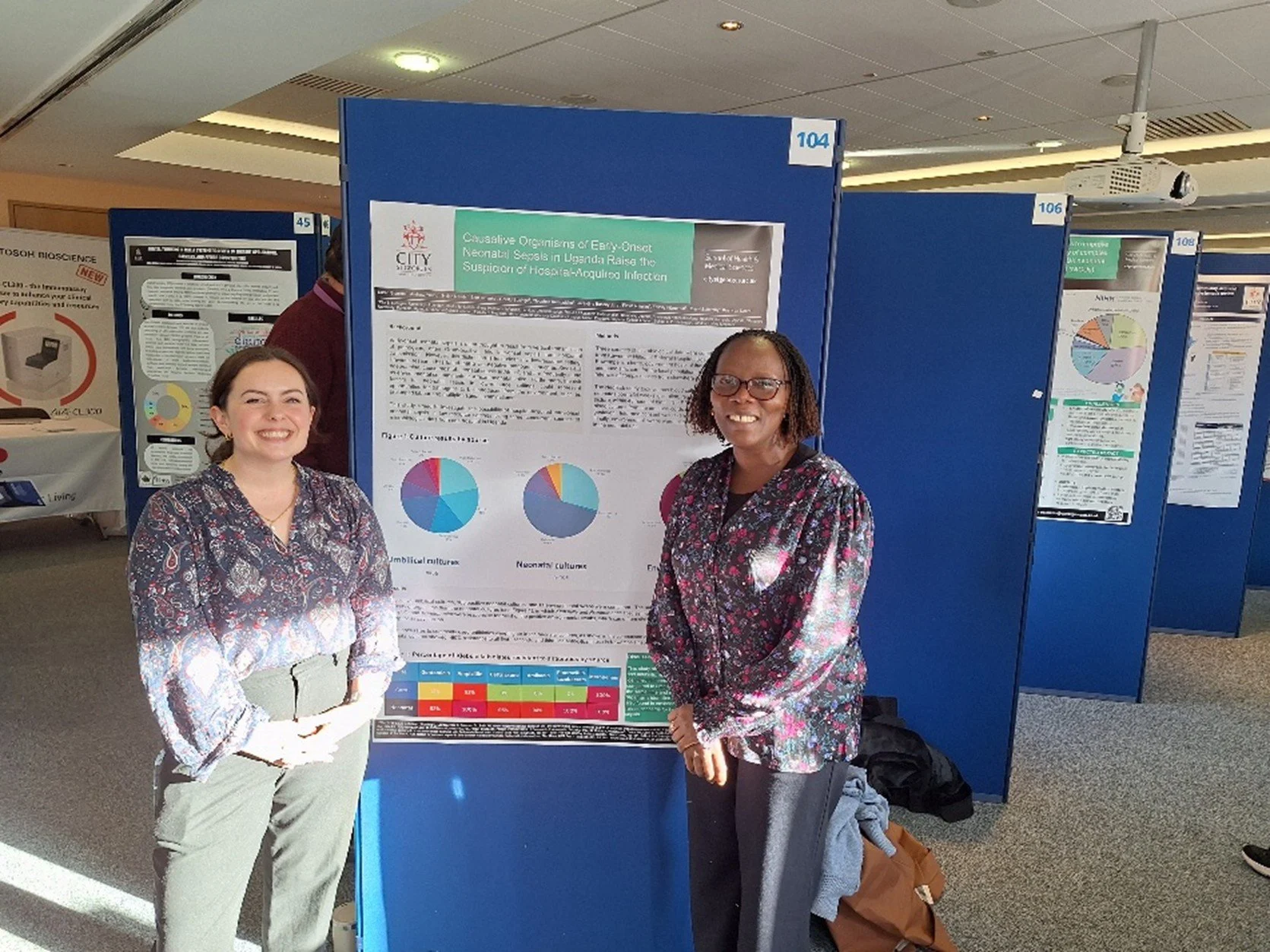
PROTECT study showcased at the Outstanding Research Award Presentations at City St George’s University
On 3 December, City St George’s University organised its annual Research Day, showcasing the world-class research done at the School of Health & Medical Sciences. The programme included the award ceremony for this year’s Outstanding Research Award, which recognises the researchers who contributed to important scientific work in the previous academic year.
One of the recipients this year was Dr Eve Nakabembe, PROTECT Scientific Lead, for the publication in Lancet Global Health on the randomised controlled trial evaluating the safety and immunogenicity of the pertussis maternal vaccine given to pregnant women in the context of HIV infection.
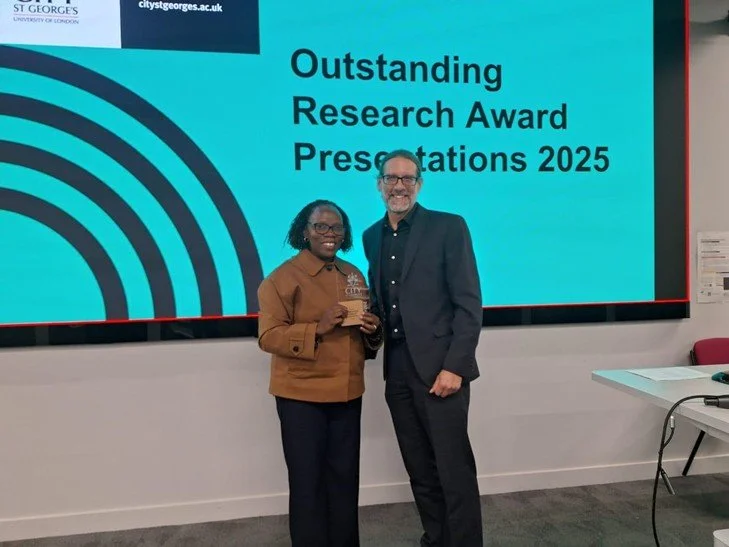
Dr Nakabembe receives the outstanding research publication award 2025 at City St George’s University of London.
She was given the opportunity to present and showcase her current work in maternal vaccine research, including the work done by the MU-JHU Uganda team as part of PROTECT. Her presentation detailed the different work packages and ongoing work in different countries, demonstrating how it all contributes to laying a strong foundation for the introduction of new maternal vaccines.
Dr Nakabembe emphasised the importance of maternal immunisation in reducing preventable infant deaths from diseases like meningitis, pneumonia and sepsis that are caused by Group B streptococcus Disease (GBS) in early infancy, a time during which most hospitalisations from severe disease and deaths occur. She highlighted the comprehensive approach used by the consortium, which includes collecting accurate and clear background rates of adverse maternal and neonatal outcomes through the use of pregnancy exposure registers, assessing the actual burden of disease for GBS and respiratory syncytial virus (RSV), building vaccine confidence in communities and nurturing a positive attitude towards participation in maternal immunisation programs.
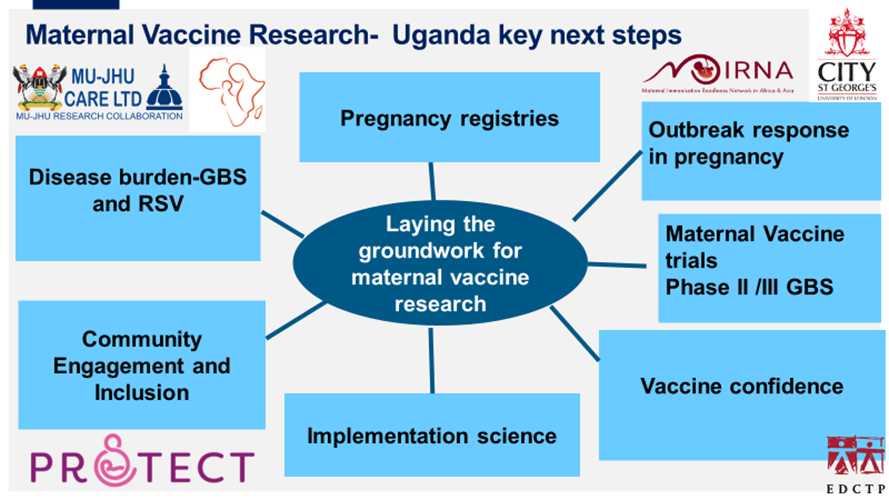
Key areas of PROTECT work presented at the award ceremony.
A call for strengthened research in low- and middle-income countries was at the center of Dr Nakabembe’s presentation, especially focusing on the countries where the burden of infectious and vaccine-preventable diseases is highest. The PROTECT project is an example of such work, with ongoing activities in Kenya, Malawi and Mozambique. The partners in these countries will not only generate data generalisable to similar settings but will also markedly benefit from effective maternal immunisation programs in the long term.